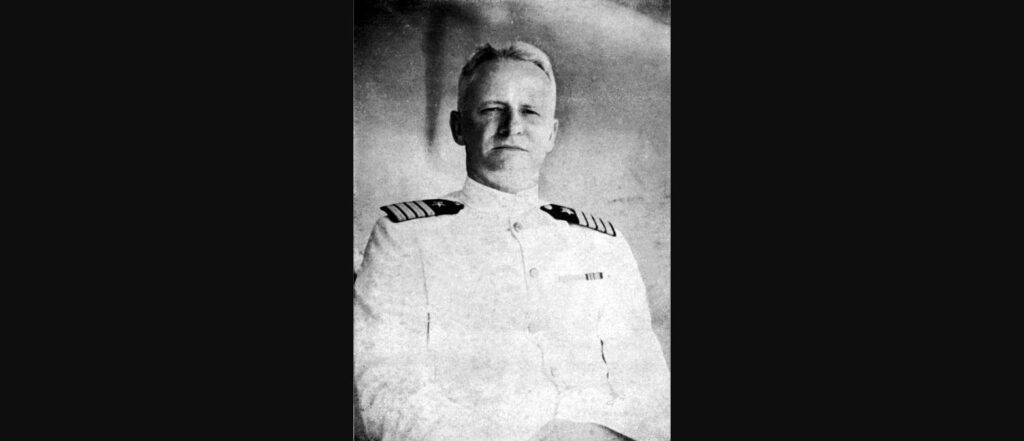
Image Source: U.S. Navy
Nimitz’s submarine career placed him at the center of a young and rapidly evolving branch of naval warfare. He commanded USS Plunger, USS Snapper, and USS Narwhal among other early submarines, and by the 1910s was recognized as one of the Navy’s leading experts on diesel propulsion, a skill set the Navy actively drew on to modernize its underwater fleet.
Between the world wars, Nimitz’s career broadened well beyond submarines. He organized the Navy’s first ROTC unit at the University of California, Berkeley, helped design and refine the fleet’s underway replenishment techniques for refueling ships at sea, and commanded a series of increasingly senior posts, including command of a cruiser division and a battleship division. By 1938 he was a rear admiral, and in 1939 he was appointed Chief of the Bureau of Navigation, the office responsible for the assignment and career management of every officer in the Navy — a position that gave him intimate knowledge of the Navy’s personnel and placed him in Washington when war broke out in the Pacific.