Chester Nimitz: Fleet Admiral and Pacific War Commander
Fleet Admiral Chester W. Nimitz helped direct the Allied naval war across the central Pacific during World War II. From his early years in Fredericksburg, Texas, to his command of the U.S. Pacific Fleet after Pearl Harbor, Nimitz became one of the central figures in American naval history.
About Chester Nimitz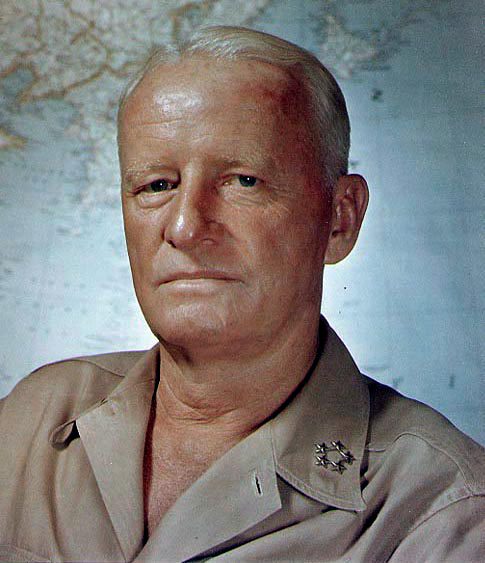
Source: Wikimedia Commons
This site is a factual guide to Nimitz’s life, career, command responsibilities, and legacy.
It is built for readers who want a clear, sourced introduction to the admiral, the Pacific War, and the naval decisions that shaped the road from Pearl Harbor to Tokyo Bay.
Who Was Chester Nimitz?
1885
Born February 24 in Fredericksburg, Texas.
1905
Graduates from the U.S. Naval Academy, seventh in his class.
1909
Assumes his first submarine command, USS Plunger.
1941
Named Commander in Chief, U.S. Pacific Fleet after Pearl Harbor.
1944
Promoted to Fleet Admiral, the U.S. Navy’s five-star rank.
1966
Dies February 20 in San Francisco Bay, California.
Chester William Nimitz was born on February 24, 1885, in Fredericksburg, Texas, and graduated from the U.S. Naval Academy in 1905. Over a naval career spanning more than four decades, he served in submarines, surface ships, and senior command posts before being appointed Commander in Chief, U.S. Pacific Fleet, days after the attack on Pearl Harbor. He later served as Chief of Naval Operations and was one of only four U.S. naval officers to hold the five-star rank of Fleet Admiral.
From Fredericksburg to Annapolis
Nimitz grew up in the Texas Hill Country, where his family ran a small hotel, and he entered the U.S. Naval Academy at Annapolis in 1901 on a competitive appointment. He graduated in 1905, seventh in his class, beginning a career that carried him through destroyer, submarine, and surface commands in the decades before World War II.
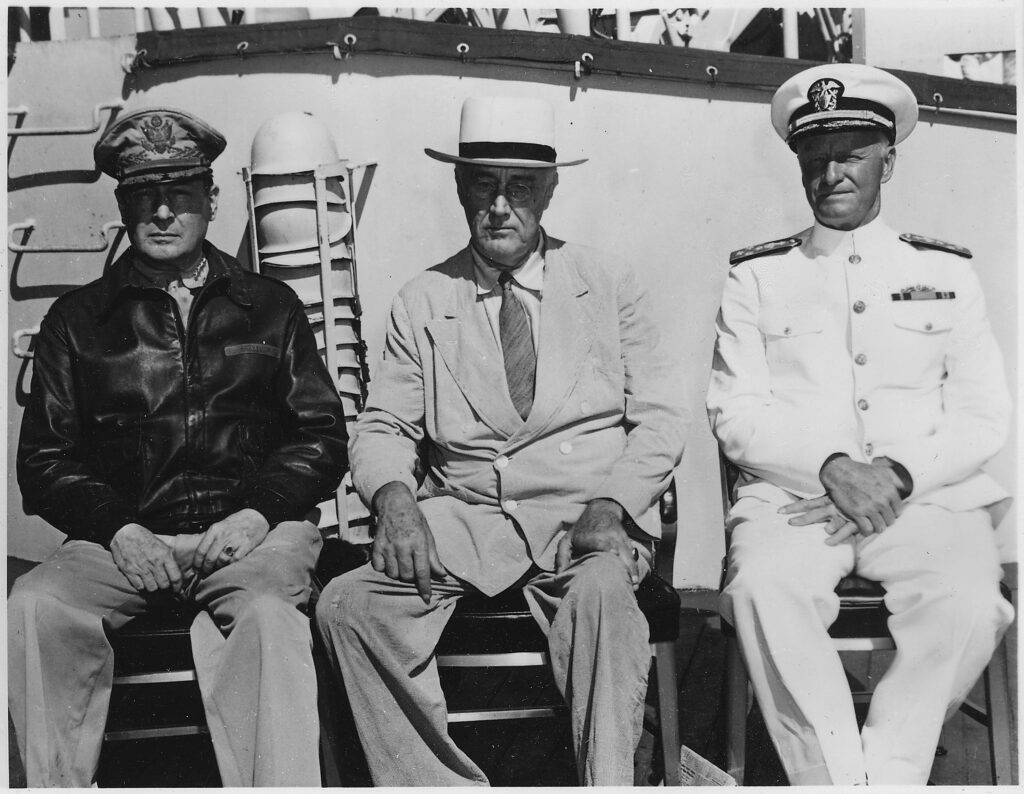
President Roosevelt with General MacArthur and Admiral Nimitz at Pearl Harbor, July 1944 (National Archives).
Image Soure: Wikimedia Commons
The Pacific Fleet After Pearl Harbor
Following the Japanese attack on Pearl Harbor on December 7, 1941, Nimitz was named Commander in Chief, U.S. Pacific Fleet, and took command on December 31, 1941, aboard the submarine USS Grayling. He inherited a fleet still recovering from the attack and was tasked with rebuilding its offensive strength while defending the approaches to Hawaii and the West Coast.
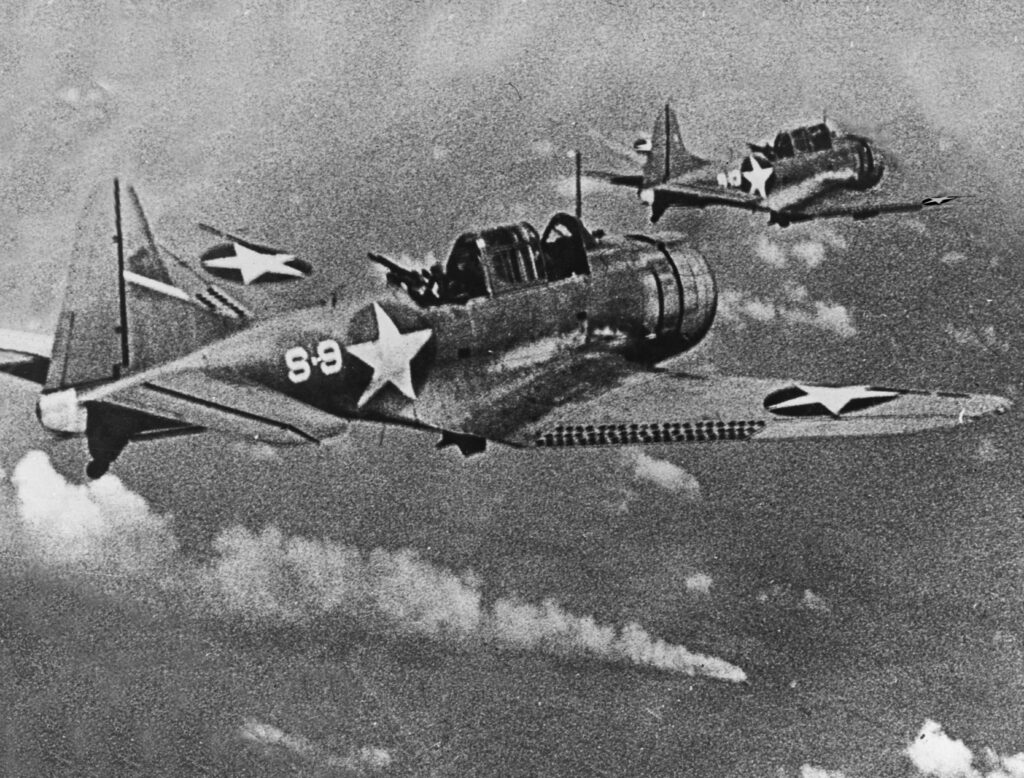
Douglas SBD Dauntless dive bombers of USS Hornet over the burning Japanese cruiser Mikuma, 6 June 1942 (U.S. Navy).
Image Source: Wikimedia Commons
Midway and the Central Pacific
“A turning point that shifted the strategic initiative in the Pacific toward the United States.”
In June 1942, acting on intelligence from decrypted Japanese naval communications, Nimitz concentrated his available carriers to intercept a Japanese force approaching Midway Atoll. The resulting battle cost Japan four fleet carriers.
Fleet Admiral, Chief of Naval Operations, and Legacy
Strategic Leadership
Admiral Nimitz commanded vast Pacific resources, emphasizing unity of command, logistics, and the steady application of pressure toward victory.
Campaigns & Operations
From the Central Pacific through the Marianas and Philippine campaigns, Nimitz’s island-hopping strategy closed the distance to Japan.
A Legacy of Service
Nimitz signed the Japanese Instrument of Surrender aboard USS Missouri in September 1945 and later served as Chief of Naval Operations until 1947.
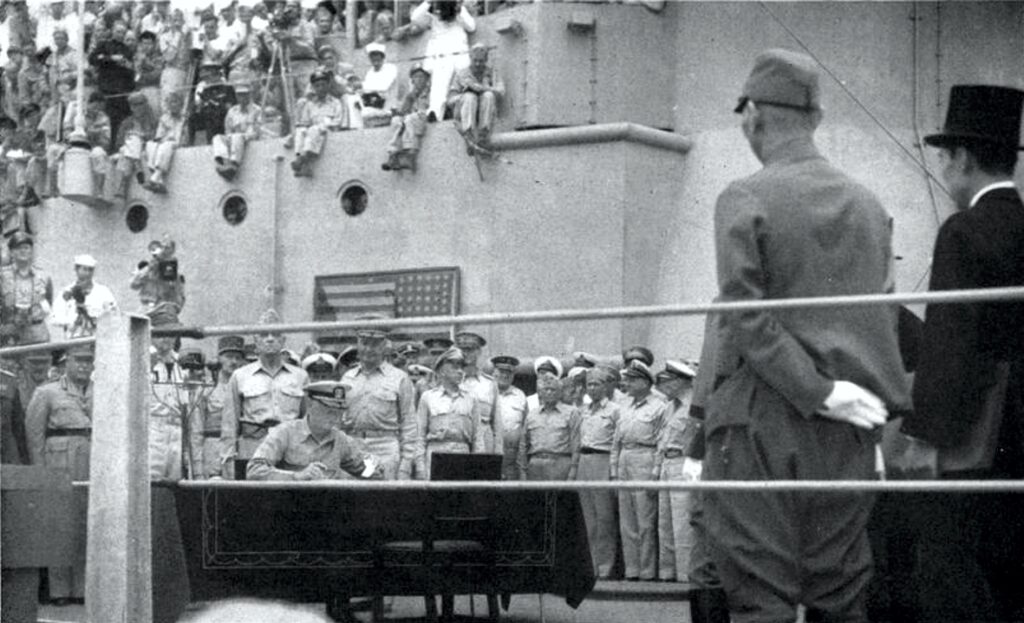
Fleet Admiral Nimitz signs the Instrument of Surrender aboard USS Missouri, Tokyo Bay, 2 September 1945 (U.S. Navy).
Image Source: Wikimedia Commons
Sources and Further Reading
This site draws on primary and archival sources. Photos on this page are in the public domain, with detailed credits maintained on our Image Credits page.